Tuesday, March 29, 2011

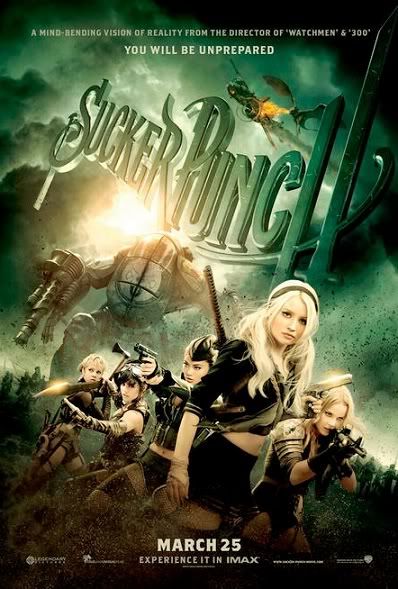
Sucker Punch


Where do I begin where Sucker Punch is concerned? I remember hearing the first rumblings of Sucker Punch sometime before or during the road to Watchmen. At the time the premise sounded like a descent into madness, reality bending fantasy extravaganza. By the time the first trailer hit, I became suspicious. Believe me, the parts of the whole of what this teaser promised me were the things of nerdy wet dreams. However, as we've all learned at one time or another (most likely after an early life binge on Halloween chocolate) too much of a good thing can indeed become a bad thing.

I'll admit right out the gate that I haven't been the best supporter of Zack Snyder's feature film career. I absolutely loved his remake of Dawn of the Dead. 300 was a fun theater experience with diminishing effect on home video and Watchmen was a valiant effort to finally do Alan Moore some cinematic justice, but ultimately focused too much on stylistics and glitzy showmanship than the overall tone and thematic bigger picture. Visionary director he may be, his insistance on staccato slo-mo action sequences and the polished, misty lens filters have become a signature of his, albeit in some cases a movie-goers deterrent.

The plot is relatively simple. Emily Browning (Lemony Snicket and the recent horror dud, The Uninvited) plays the aptly named Babydoll, as she looks more plastic than human, accidentally murders her sister while trying to defend her from their molesty step-father. He sends her to an institution and organizes a wholly unnecessary lobotomy, due in the next five days as the lobotomist (an unfortunate turn for Mad Men's Jon Hamm, who knocked it out of the park in The Town last year...) isn't immediately on hand. So Babydoll meets the other crazy girls with equally inexplicable monikers (Abby Cornish as Sweet Pea, Jena Malone as her sister Rocket and an thankfully underused Vanessa Hudgens as Blondie... yep, she's not blond either...) and suddenly *FLASH* the mental institution is now a strip club/brothel. Why is Babydoll's initial escape fantasy a brothel? Your guess is as good as mine, but I'd bet it's just a cheap excuse to dress them all as school girls for 90 minutes.

Male Nerds - 1

Female Empowerment - 0

So the institution is now a whorehouse where the orderlies and employees are represented by other whorehouse workers and patrons. Carla Gugino puts on a clearly super-real Polish accent as Madam Gorski the matron of the whorehouse/dance instructor/head therapist in the "real" world institution. Now comes the fun part. Babydoll finds that when she dances, everyone (and I mean everyone) who witnesses it is so entirely captivated that no one can do anything else BUT watch her dance. Funny, because as an audience we NEVER see it. You see, every time she dances, she goes into a trance like state and enters yet another perception ofreality making up the marketing campaign that has deceived us all. You've got everything nerds wet their pants for from Steampunk Nazi Germany to a Total Recall Robot Train, all of which makes no symbolic or allegorical sense in regard to what might be happening in the second level of fantasy, and even less sense in the ultimate real world which we still haven't seen since the first time Babydoll set foot in the asylum. But hey, all of the (still scantily clad) patients are wielding guns, swords, knives and are kicking major ass. Nothing spells empowerment like wanton violence in pig-tails, amIright?

To its credit (of the few there are) Sucker Punch finally utilizes the slo-mo technique much more organically and in a way that's not poking you in the forehead every time it's going on. The CG environments, makeup and costuming are all top notch. No two ways about it, Snyder knows how to utilize a budget to make a movie look pretty. Though, as so many Disney movies have taught us, it's what's on the inside that counts and Sucker Punch is like that head cheerleader in high school, expecting to coast along on her good looks for the rest of her life.

As it stands, pretty much everything that's wrong with Sucker Punch is script and story centric. This stands as Snyder's first movie where the story was 100% his own (with script co-written by Steve Shibuya.) Dawn being a remake of the 70's classic mall zombie flick, as adapted by cult hero James Gunn and 300 and Watchmen being the page-turning brainchildren of Frank Miller and Alan Moore, respectively. Snyder understands the structure and the pacing, but any form of subtext seems to be beyond his capacity as a storyteller. The distinct disconnect and subsequent disregard to other levels of reality is where Sucker Punch really gets hurt. It feels as if there could be more potential for thematic discovery without resorting to literal Dragon-slaying and in the end just feels like empty fan service.

The soundtrack is another conundrum. It's a known fact that there actually were dance numbers committed to film, but were cut due to time constraints for release. So when Emily Browning was tapped to provide her own vocals for covers of songs like "Sweet Dreams" and "Where is My Mind?" (I know, right?) all signs pointed to a Moulin Rouge meets Fantasy CosPlay session style musical. Which would've made more of the movie work as a whole. Instead what we get are pop-song overtures played overtop dialog free vignettes which melt into score-pieces styled after said pop-songs and then a prolonged music video-esque action sequence. I feel like if Snyder had just gone all out and made it an operatic full-on musical it would have been much more engaging as an experimental nerdish amalgam. However, there are already rumblings of a director's cut which will re-insert the previously cut dance sequences.

So what now? We could consider this a win for the creative community since Snyder was able to take a wholly original idea and have it financed and released by a major studio. Though it's box office draw (a mere $19 million and losing to Diary of a Wimpy Kid 2) and critical reception (currently 20% on Rottentomatoes.com) could make Warners and other major studios wary of original concepts in the future. Which leaves the future of the Superman franchise in question as well. Did Christopher Nolan make the right decision choosing Snyder to direct the much needed reboot of the Man of Steel? As casting is still underway and the script has yet to be finished (with Snyder nowhere near it, thankfully) more remains to be seen. Unfortunately Sucker Punch is not so much an utter failure, but a great disappointment for the nerd community.

Friday, May 28, 2010

Shrek Forever After (or The Final Chapter)


I'm not sure what the real subtitle for the new Shrek movie really is. Is it Forever After? Is it the Final Chapter? The inconsistency with the ad campaign is confusing enough, but when it comes down to it, Shrek 4 (of which I will be referring to it for this review) does not at all contain any semblance of finality.

Considering the success of the franchise, the sad true nature of a Shrek movie is that it's a one-and-done affair. Even in the good entries to the series (1 and 2, admittedly I've never seen 3, but word of mouth confirms my suspicions) slide off the brain almost immediately like water off a duck's back. There was nothing considerably memorable about the series as a whole and this is doubly true for Shrek 4. It's because of its forgettable nature that there can't really be a definitive "end" to this "series." Each one pretty much wraps itself up before the ending montage (which usually features a modern cover of a "classic" tune while all the characters dance and act happy) the only thing defining each film is the threat to Shrek's supposed comfort zone.

Though, this time around they've gone the extra step to create a sort of pre-existing dilemma for Shrek, Fiona, Donkey and whoever else is a major player in this franchise at this point, but again, this is just shoehorned into the story for "closure" effect. Apparently, around the time Shrek was rescuing Fiona from the Tower (see: Shrek 1, actually don't...) her troubled parents went to see the Goblin/Trickster Rumpelstiltskin to garner a deal to free their daughter from her curse without having to be troubled with finding a hero to do so. The deal was almost penned when Shrek saved the day and the contract was no longer needed. Fastforward to after the 3rd installment (where I believe they have babies??) and Shrek is bored with his family life and wishes to be the formidable ogre he once was, though with that lovable green mug and Mike Meyers Irish accent this concept is still as foreign as it was when we were introduced almost 10 years ago... Long intro, short, Shrek pens a deal with a now homeless Rumpelstiltskin which erases the day Shrek was born and gives way to an alternate reality where everything kind of sucks and "Rumpel" (as he's called by everyone) is King of Far Far Away.

There is a modicum of cleverness about Shrek 4, namely the disparity between Far Far Aways and the explanation to why everyone knows Rumpelstiltskin's name (if you're not familiar with the fairy tale, your parents have failed.) However, most of the reason why Shrek 4 fails on so many levels is the feeble and stumbling attempts at comedy. There didn't seem to be a single successful joke throughout the entire film, the only scenes that evoked even a mild chuckle had already been played out in the trailers and TV spots. This may also be due to the fact that Eddie Murphy isn't anywhere near funny anymore and Donkey might just be the most annoying animated character this side of Stewie Griffin.

Even the pop-culture references seem uninspired and relatively dated. When the most recent thing for the Pied Piper to belt out is the flute riff from "Sure Shot" (the Beastie Boys single from their 1994 record "Ill Communication") you'll be lucky if any of the parents remember the tune, let alone the children that no doubt dragged them there.

Such is the nature of the beast (ogre in this case) that it will make millions upon millions of dollars during its theater run (mostly thanks to inflated 3D prices) and sell more than a handful of DVDs when the time comes, but like all three of its predecessors, will fade from memory as if it never even happened. I'm going to call bullshit now and there WILL be another chapter on the horizon (my tentative title, Shrek's 5th of Vodka, which will be required to endure it) but if Shrek Forever After/The Final Chapter truely IS the swan song for the franchise, we really are living in a fairy tale.


Thursday, May 13, 2010

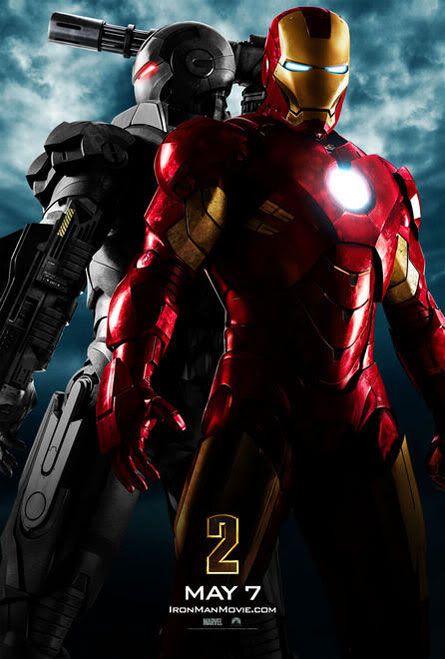
Iron Man 2


It seems that Iron Man 2 has come under a good amount of unfair criticism following its release a couple weeks ago. The word was relatively positive at first, but then the box office intake took a dive in its second week and then the backlash began. Admittedly, comic book movies are now held to a higher standard thanks to Christpher Nolan's Batman epic The Dark Knight, which in this case is wholly uncalled for. On their first outing (also born in the looming Shadow of the Bat) director Jon Favreau and star Robert Downey, Jr. proved that you could have a hero grounded (relatively) in reality and still have fun with it. The same rings true for it's sequel.

This time out Tony Stark, now completely outed as Iron Man, finds himself poisoned by the arc reactor he'd originally streamlined to keep him alive after his Middle Eastern run in with his own weaponized shrapnel. Enter the new flies in Stark's respective ointment, Justin Hammer, a fellow merchant of destruction (who just so happens to be a funhouse mirror reflection of a first act Tony Stark from the original film, played brilliantly by Sam Rockwell) and Ivan Vanko, Russian son of a former Stark associate, Anton Vanko who was ousted and deported for allegedly selling secret tech to the USSR. Vanko has sworn his revenge on the Stark legacy and Hammer is determined to one-up the Iron Man model in one form or another and the two forge an unlikely and ill-advised union for their respective personal gains.

And this is just the main narrative through-line. On the outskirts of this plot is the quickly developing "Avengers" movie which involves Samuel L. Jackson's Nick Fury (agent of S.H.I.E.L.D.) and Scarlet Johannsen's Black Widow, and for a set of characters and structural threads that won't come into play until well after next summer they are surprisingly well balanced with the core of the film. It sets the stage for something much larger, but doesn't demand more attention than is required to thoroughly enjoy the story at hand.
While Downey, Jr. took the cake and devoured it whole in the first film, he's found a worthy acting adversary in Sam Rockwell. Taking a break from his indie success for a moment to cavort with the A-Listers, you'd be surprised that Rockwell hasn't broken in to a more mainstream market when you see him acting circles around 90% of the Iron Man cast. His portrayal of Hammer as the cocky weapons entrepreneur is pure gold, every line of dialog smarms its way out of his mouth with an unadulterated zeal that shows that he's the kind of actor that digs in to the character, finds what makes them tick and drives it straight home. Which isn't to say that Mickey Rourke's turn as the Russian powerhouse (and apparent amalgam of 2 classic Iron Man villains, Whiplash and Crimson Dynamo) isn't as awesome as it sounds. The extended version of the drag race fight featured in most of the coming attractions is one of the more awesome spectacles in recent comic book movie memory. Though similar to Jeff Bridges' Iron Monger finale beat-down, Vanko's last hurrah seemed a little bit rushed.

The recasting of Terrence Howard for Don Cheadle in the role of James Rhodes (read: War Machine) was probably the smartest recasting move this side of replacing Katie Holmes with Maggie Gyllenhaal. Howard's cocksure version of Rhodes didn't curb the Stark persona the way their relationship requires. Cheadle, a more accomodating dramatic actor, provides a more believable voice of reason to Tony's playboy mentality and their dynamic as Iron Man and War Machine, respectively, is better for their individual talents as actors.

Iron Man 2 isn't the perfect comic book movie, or even the perfect sequel, however it IS the perfect follow up to the already established cinematic canon presented in the first film. If all the pieces of continuation mythology pan out as well as their predecessors, the upcoming Thor and Avengers movies could prove to set a new standard for adapted cinema. Then again, there is still another Christopher Nolan helmed Batman on the horizon, so anything is possible.


Tuesday, May 11, 2010

Editorial: What Went Wrong in Happy Town?


Happy Town hasn't even been on ABC for a month yet and already the axe has come down. Is this an irrational move on ABC's part? Some might say yes, as similar fates have met more recent shows like Life on Mars (with whom Happy Town shares its showrunners,) The Unusuals and Pushing Daisies. However, this time around something tells me that there will be few fan campaigns to urge the continuance of the mystery of the Magic Man (statistics based solely on the dwindling numbers of the Facebook Fan page.) So who is to blame here? Did ABC mismarket the show? Not when there was a strategically placed extended TV spot during the last five weeks worth of Lost, the key demographic for a show like Happy Town during the network's highest rated scripted hour. The show was relatively well advertised, playing up its shock horror and mystery aspects, so where did Happy Town take a wrong turn?


The Track Record Stands
As it stands, showrunners Josh Appelbaum, Andre Nemec and Scott Rosenberg don't have the best televised track record (October Road, Life on Mars both short lived and canceled early.) The pattern should tell you something. These guys can't handle their ideas. The audience either isn't getting what they want or being given a reason to continue watching. Even within the first two episodes of Lost or even Heroes there were more questions than answers but there was still a general consensus of what the main idea of the show was (Lost - why have these seemingly interconnected individuals landed on this mysteriously uninhabited yet thoroughly dangerous island, and Heroes - While people around the world are discovering abilities, how do they converge into the destruction of an entire city, though this idea was quickly run into the ground and mishandled in its own special way.) Two episodes in to Happy Town, there is very little that holds any of the plethora of ideas together. There's the enigmatic "Magic Man" of which people in town either don't know anything or are unwilling to talk about (yet the audience would benefit from even the slightest hint as to why this figure is such a local taboo,) the new girl with an ulterior motive, the batshit crazy, self-surgical sheriff and a bread factory. But what does all this have to do with anything on the show? Is the sluggish pacing and overtly precarious mystery placement the culprit for cancellation? There's also the instances of poorly written dialog and inherently illogical character behavior. Whether or not the town of Haplin is a beacon of darkness in a more or less chipper Northern MidWest, you'd be hard pressed to find police procedures that would think it a good idea to inform the next of kin in front of a room full of co-workers and visiting school children. When it comes down to it, a scene like this only serves for an over the top dramatic effect. It's not creepy, it's just stupid. Then there's the over-explanatory dialog to characters that probably already know the details, creating a roundabout break in the fourth wall while the characters all but look out toward the audience to catch them up to speed. A cardinal rule in most writing is "show don't tell." From the starting block, Happy Town has been all tell and no show and what they do decide to show makes little to no sense in context. Are these problems fixable? Perhaps, but then there are the characteres.

Who Are These People?
There are well over twelve major characters in Happy Town. Juggling an ensemble cast like this is no easy task, something J.J. Abrams and Joss Whedon can attest to on more than one occasion. Why do you think police and medical procedural shows stick to a main cast of two or three and a supporting cast of another three or four. So you do the math, two episodes come in at around an hour and a half which is not nearly enough time to set up motivations, back stories, or even the rudimentary sense of who any of these characters are, given the depth of "mystery" that is attempted in this series thus far. Needless to say, delegating the wooden Geoff Stults as the paper thin lead character is a mistake in and of itself. As an "everyman" with a chiseled jaw and strep throat-raspy drawl, this is the character that will usher us through the town of Haplin and crack the inexplicible mystery of "The Magic Man" and that weird supernatural CG hawk. Brawny physical CW appearance aside, Stults just doesn't have the acting chops of a leading man. He reads the lines and delivers the dialog, but we get no sense of character or purpose, and the real shame is that he's surrounded by A-list veterans that can and have held their own on the big and small screens. Which brings me to...

A Star is Boring
I've always said that even the strongest of casts can't save shoddy writing. It takes a lot to make performances from Frances Conroy (Six Feet Under), Sam Neill (Jurassic Park) and Stephen Weber (Wings, Studio 60 on the Sunset Strip) seem second rate and forgettable. Dropping them into uninspired, underdeveloped side characters is likely the biggest mistake the show has made. Granted these aren't the easy on the eyes, gorgeously chiseled starlets that make the visual draw (though arguably Amy Acker IS and is still left to the side as the ho-hum housewife to mannequin husband Geoff Stults) but these thesps CAN act and carry a scene. However, these scenes are too short lived and too inconsequential to really matter in the long run.

The Lynch Derivative
Of course there were comparisons to Twin Peaks from the get go, and you'd be hard pressed not to make the parallel between the two. Each involved a small, seemingly normal town with very mysterious and clandestine goings on. The difference with Twin Peaks being that David Lynch operates on an entirely different wavelength than mainstream network television (and most human beings in general.) Even when things in town are supposed to be normal there's something inherently off kilter about everything and when things are getting increasingly strange, the reactions are oddly unsuspicious. It's these disparities from what we see as the norm that made Twin Peaks the suspenseful cult hit that is was. The more normal things seemed, the more impactful the strangeness became when it presented itself. We're not in Haplin for more than a couple of minutes when people start acting suspiciously bizarre and dropping hints that "Happy Town ain't all that Happy." Everyone is aware they're on a strange show so that when something strange happens, it's expected and falls flat as a thematic device. It could have been presented as a normal mystery series, but goes out of its way to be bizarre just for the sake of using wacky imagery and including pseudo-poetic musings from the mentally unstable trough of characters. Even still, despite Peaks' current status as a cult legacy, it was canceled after only 2 seasons. Long story short, don't attempt to emulate David Lynch unless your name is David Lynch.

In the End
So do I think ABC pulled the plug prematurely? Yes, in a way. Though, did Happy Town really stand a fighting chance in today's scripted TV economy? No, there was almost no way the show would've succeeded beyond the initial 8 episode order, especially with a pilot as uneven and hackneyed as "In This Home on Ice." Two episodes isn't nearly enough for a cult following so it's not likely too many tears will be shed at the demise of yet another Lost-Replacement-Contender. After tonight's episode, the remaining 5 episodes will burn off in the summer and the town of Haplin will quietly fade into the forgotten realms of the TV archives alongside the likes of Point Pleasant and Wonderfalls.

Monday, March 29, 2010

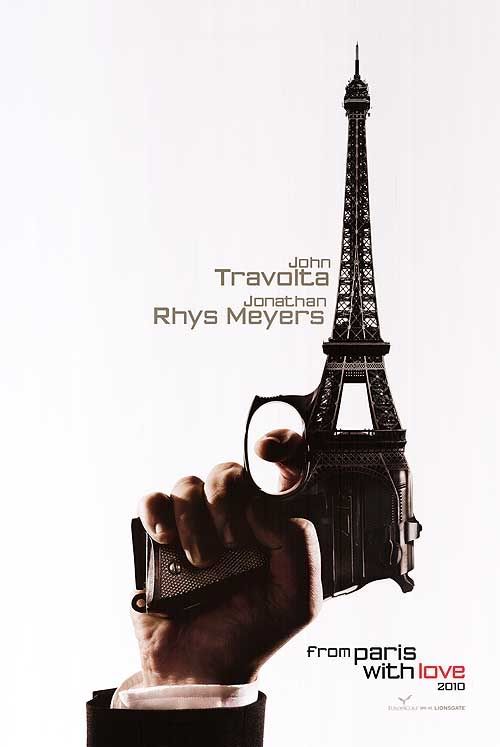
From Paris with Love


And so the theatrical drought months continue. This week's victim... From Paris with Love. A title that makes about as little sense as the film itself. Being the second joint venture from latter day action guru Luc Besson and director Pierre Morel, a better title for this cinematic mess would have been "Cluster-frak to the Plot Device."

The plot, near as I can tell, follows James Reese played by Tudors star Jonathan Rhys Meyers, an aspiring US ambassador's assistant stationed in Paris. Days before a US official arrives for a summit meeting, Reese is unwittingly planted alongside American wild-card hit-guy Charlie Wax, a terribly miscast and silly looking John Travolta, and the two stumble upon some, well, terrorist stuff somehow.

Luc Besson can still function as a producer and Morel's visual style is tailor made for the action genre, however the script by Adi Hasak is as frustratingly pedestrian as it is blatantly immature. Travolta's role sounds specifically written for Wesley Snipes and when he either declined or wasn't available, nobody bothered to adjust it for Travolta and his doughy physique. Whether it's his overuse of MF-bombs or the idiotic bald head/goatee combo, the outcome is unintentional comedy. And while it takes a great deal of finesse and planning to cut those action scenes around a middle aged chubster dressed like a Tusken Raider from Star Wars: A New Hope, you can't help but laugh at the fact that this is the guy who was in Old Dogs not two months ago. As a conglomerate of fifteen years of better action films, From Paris with Love contains enough laughs to warrant a Red Box rental if nothing else, but just know you'll be laughing AT it, not WITH it.

Legion


(Transcribed from 91.9FM's 91 Seconds on Film segment)

It's January and the cinematic dumping ground is officially upon us. If Moses had access to the movie Legion, the Jews would have been freed from Egypt in just under two hours without the hassle of plagues or sea parting. By all logic, Legion shouldn't be a movie. This means that a script was written, someone okayed the script, found financing and budget, A-list actors, crew, cooks, carpenters and a studio willing to put their name on it before it comes even close to a theatrical release. How any of these parties got involved beyond the scripting point can only be deduced to an inexplicably large sum of money.

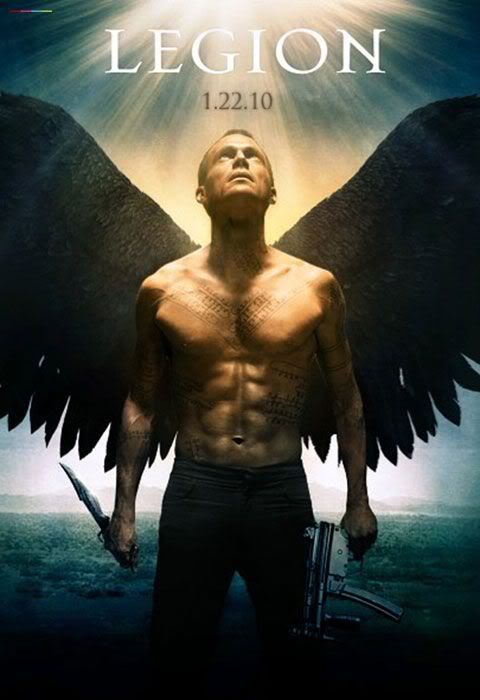
So Legion gives us the Paul Bettany as the Archangel Michael who has come to 21st century earth to save humanity from a vengeful God by preserving the life of a baby that is apparently important to this scenario for reasons we never find out. So he holes up in a middle of nowhere desert diner with a band of red-shirts that are either wholly unlikable or terribly dull. So instead of applying anything from the book or revelations, God decides he's an Evil Dead fan and possesses humans to serve as an easily disposable army against Bettany and his sharpshooting stowaways. For a director with a background firmly rooted in special effects work, the visual effects in Legion are laughable and frequently edited around with more shots of blazing gun barrels and bouncing machine gun shells. It's hard to tell if the actors were in on a joke the director wasn't aware of because Dennis Quaid and Charles S. Dutton phone in the best performances of their latter day careers, unfortunately through characters that have either no thematic relevance or real narrative purpose beyond demon fodder. I'd say that Legion is to the point of "so bad it's funny" but after a certain point even the unintentional laughs become predictable creating a misfire of truly biblical proportions.

Friday, February 26, 2010

Tales from the Back-Log

So everything's been pretty hectic over the last few months. I've been able to maintain my reviews for the radio, but haven't been able to transcribe them onto the net in a timely manner, so the next 3 reviews will be a little dated. Now that everything is relatively settled, I should be able to keep everything posting at a normal rate again.

Thanks for reading!

Thursday, February 25, 2010

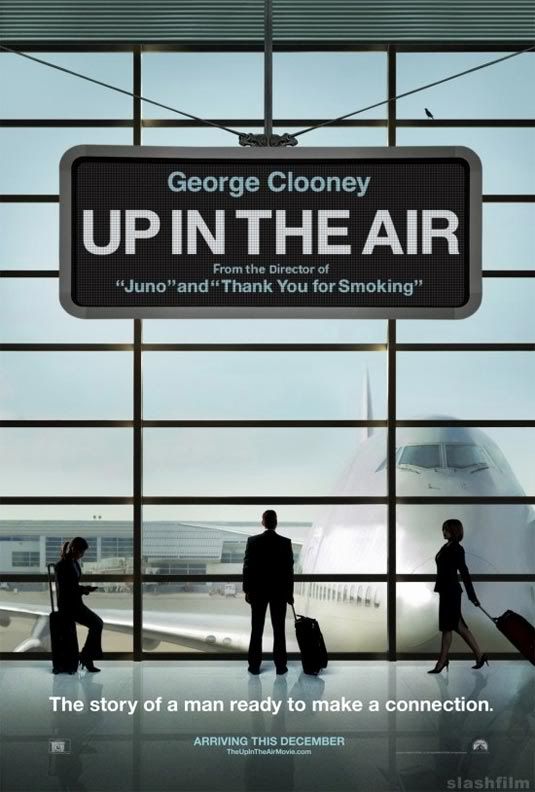
Up in the Air


For a film primarily about air travel, allow me to open with a stupid joke. Jason Reitman totally nails the landing! As far as his directorial career, he's shooting three for three. 2004's Thank You for Smoking was a solid first feature endeavor and despite the problems I had with Juno on a screenwriting level, it was a very well put together movie, as far as teen romance/thinking outside the box comedies are concerned. Up in the Air looks and feels like the perfect tonal follow up to TYfS.

Clooney plays Ryan Bingham, a "miles" obsessed travel addict who takes on the seemingly difficult task of laying off individuals when the company they work for is too chickenshit to do it themselves. Though Bingham handles his job with poise and confidence, granting words of wisdom tinged with a poetic grace as he ushers the newly terminated into their new life of future employment. Enter two drastically opposite, though equally valuable females into Ryan's life. Alex, a fellow travel-phile and sometime bed-fellow with which he shares a profound connection in their respective philosophies about life and Veronica, the company's new upstart determined to outsource Ryan's job with the advent of internet video chat.

Interspersed amid the narrative are actual personal accounts of people who have been "let go" of their corporate livelihood. A gutsy move considering the economic climate and massive layoffs taking place in the country. Though it's not a downer by any means, but more of an uplifting snapshot of the human spirit in the face of one of the most devastating experiences we can have in life next to breakups and the death of a loved one. Accenting these asides are brief yet excellent performances by Zach Galifianakis and JK Simmons to anchor these vignettes to the narrative. Jason Bateman also puts in a markedly off typecast role as Bingham's cutthroat boss. If nothing else, this film is the reason why George Clooney is a leading man in the film industry, completely deserving of any nominations that are coming his way. Vera Farmiga (The Departed) does a bang-up (no pun intended) job as Alex, branching out as a newly christened A-lister. The most notable impressive casting choice was Anna Kendrick as Veronica. Best known for her barely supporting role in the Twilight films, she shows range and skill in this emotional roller coaster of a role.

Stepping back into the writer's room adapting the novel by Walter Kirn, Jason Reitman is quickly becoming the voice of his disembodied generation. He doesn't seem at all intimidated by either his father, Ivan's the cultural footprint or extensive catalog of producing and directing credits. The junior Reitman exudes a very plain honesty about character and interpersonal relationships that many modern dramas overlook. Where most films will polish their themes with flashy dialog, and while Bingham is a big talker, Up in the Air's most poignant moments often don't include any dialog at all. It takes a talented director to connect with an audience in these quiet moments onscreen, and is likely by Up in the Air is one of the best movies you're likely to see this year (2010 included.)


Wednesday, February 24, 2010

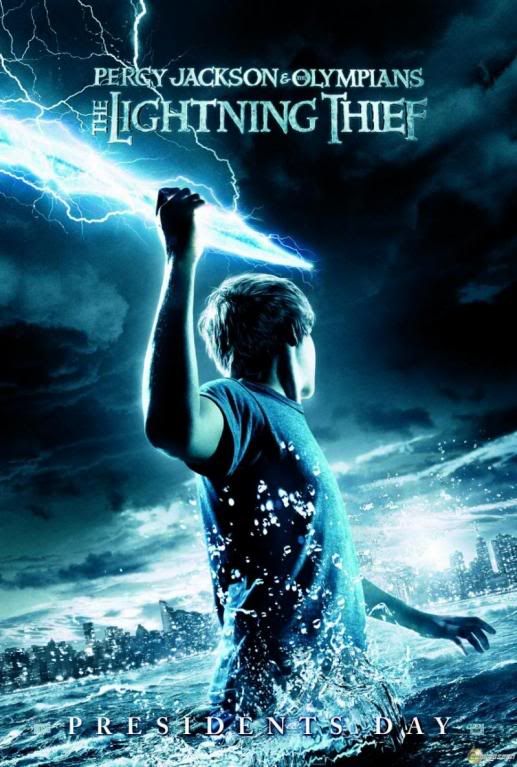
Percy Jackson and the Olympians: The Lightning Thief


They say lightning never strikes twice. In regard to Percy Jackson and the Olympians colon The Lightning Thief, the true thief is, in fact, Harry Potter himself. It seems the studios have been churning out countless one off duds since Pottermania turned a decent profit almost ten years ago. However Young Adult fantasy franchises seem to hit the big screen and fail to draw an audience, the inexplicable phenomenon that is Twilight notwithstanding. So after star studded failures like The Spiderwick Chronicles, The Golden Compass and Eragon, it's no surprise that Percy Danger and the High Voltage Squad colon Electric Boogaloo fails to gain a foothold in the niche that Potter is so close to vacating.

Percy Daggett and the Olympic Medalists colon Thunderstruck brings absolutely nothing new to the table as far as teen fantasy is concerned. Percy is your run of the mill teen that likes to sit at the bottom of the school pool for drowningly extensive periods of time. He soon finds out he's the cross breeded offspring of the Greek God Poseidon. It turns out Zeus' lightning bolt has been stolen and he blames Percy because… well… Why not? This will cause a war among the gods for an unforeseen and never mentioned reason. Percy gets attacked and is sent to Hogwarts… I mean… God Camp to learn how to be a warrior, since that's what gods do. Pierce Brosnan makes a literal horses ass of himself as his Centaur teacher before Percy and his resident Ron and Hermione clones run off to save his mother from Hades, against Camp Rules, of course. There is a stellar cast, the likes of Uma Thurman, Catherine Keener, Rosario Dawson and UK funnyman Steve Coogan tossed in amid the tepid performances of the three lead adolescent characters who meander through their dialog and character arc cliches. Occasionally, a cleverly re-imagined piece of Greek Mythology will surface, but Potter director Chris Columbus gives it so little attention, it's poignancy is lost to make way for the next pratfall or sight gag. With Potter ending within the following year, the Young Adult fantasy market is due for its next moneymaker, though chances are Perry Nuggets and the Neanderthal Clan colon Storm Chasers is not going to be it.

Monday, October 19, 2009

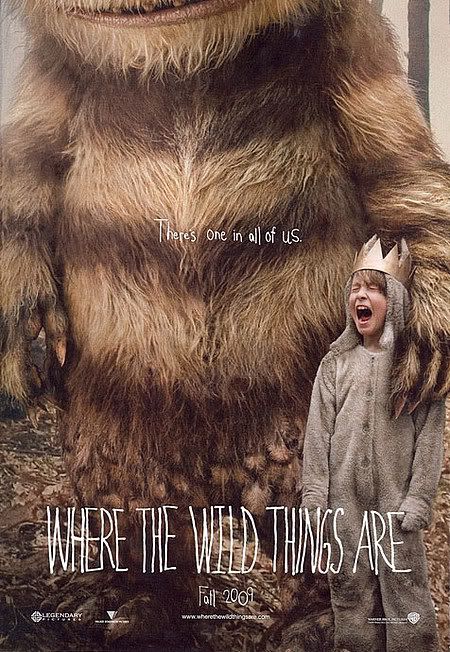
Where the Wild Things Are


It's a book with 40 pages and 10 sentences. Maurice Sendak wrote it in the 60's to a heavily mixed reception until it eventually became an established classic and a hallmark of childrens literature. Given the brevity of the material and the state of basically all film adaptations of storybook classics it's amazing that a workable 90 minute movie could be lifted from "Where the Wild Things Are." Lucky for us, Maurice Sendak isn't your normal kids author and Spike Jonze isn't your normal film director.

Aside from the animated version from the 70's (which clocked in at a staggering seven minutes) a full length feature seemed not only a generally bad idea, but seemingly implausible without the contrivances of "back story" and inflated, heavy handed thematics (Ron Howard's The Grinch comes to mind...) Then in steps independent visionary director, Spike Jonze (Being John Malkovich and Adaptation,) having struck up a genuine friendship with Maurice, took the project in an unexpected and daring direction. With Sendak's blessing to "do whatever you want with it," Jonze teamed up with author Dave Eggers (A Heartbreaking Work of Staggering Genius and this year's indie hit Away We Go) to bring out the thematic importance of not only what the book is about, but what it truly means to those that have enjoyed it for generations.

As the story goes, Max, adorned in his wolf costume, is an unruly child that is sent to bed without any supper after causing more mischief than his mother is willing to deal with. Max creates a fantasy world in his bedroom and sails to the land of the "Wild Things" and becomes their king. All the elements of the book are prominently featured (even down the the opening, pre-credits sequence in which a rambunctious Max chases his pet dog with a fork.) The expansions on the material consist of exploring the reasoning for Max's behavior. What causes him to act out? Why does he feel the need to escape? What ARE the Wild Things, realistically and to Max? The film meets Max as a normal kid with an overactive imagination. His parents are divorced and his sister is too old to be his friend any more. This is a child dealing with feelings and emotions he doesn't even understand yet, let alone knows how to deal with on any real level. Therein, whether his trip to the land of the Wild Things is real or not, it's an internalization and a personal mirror for Max to work through his feelings.

Each of the Wild Things represents a piece of Max and at the same time, pieces of the opening 1o minutes are either revisited or presented in a new light during Max's visit. The lead creature, Carol (voiced amazingly by Tony Soprano himself, James Gandolfini) is the closest representation of Max, and ultimately becomes his best friend. Ira (Forrest Whitaker) plays to Max's creative side and his island partner, Judith (Catherine O'Hara) sometimes represents Max's feelings on his older sister. KW (Six Feet Under's Lauren Ambrose) is the closest creature to representing the mother figure and the catalyst for many of the emotional squabbles. There are no heavy handed morals, or extensive speeches that come out and say all the lessons presented in the contained material, these are left for interpretation by the viewer.

Max Records, the breakout star as the aptly named Max, puts on the most genuine and honest performance of any child character ever seen on film. When I say Max is a genuine little kid, he IS a REAL little kid. He's not the wise-beyond-his-years, prodigal child that speaks like an adult that we see in every other kids movie. He thinks and speaks like a REAL little kid. He moves like a REAL little kid. His logic is mired in the trappings of a REAL kid's imagination and that's why it works so well. While some of the more intricate ideals in Where the Wild Things Are may not be apparent to some children, they should be able to at least relate to Max on a fairly personal level (given they've got the capacity for at least some imagination.) Catherine Keener makes a brief but notable appearance as Max's tired and exasperated mother. She does a wonderful job of evoking sympathy while standing in the way of Max's journey.

Where the Wild Things Are sets the bar pretty high for a family film. It doesn't talk down to the audience, but operates on the fact that while you may not know what you're feeling during or afterward, you genuinely felt something. It's there to let us know, it's ok to feel scared and sad sometimes, even if we don't know why or how to fix it. These are the things that make us human and these are the things we need to come to understand when it comes to growing up. And growing up is ok, but it's also ok to keep that inner child on standby because you should never have to take everything so seriously.

Friday, October 16, 2009

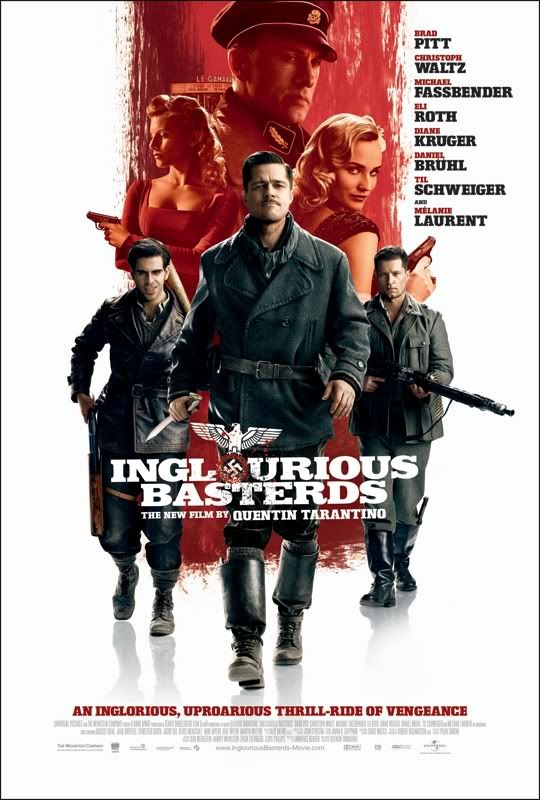
Inglourious Basterds


Quentin Tarantino likes to take his time between films. He'd originally announced the concept for Inglorious Bastards shortly after Jackie Brown (and the advent of the World Wide Web) though details were sparse, set to star then Tarantino favorite Michael Madsen and citing World War II and French Jewish Nazi Killers, the project was seemingly forgotten in the wake of the looming Kill Bill rumor mill. Now, 10 years later, Inglourious Basterds (misspelling intentional) finally sees the light of day.

The first thing to be aware of going in is that this is a Quentin Tarantino movie. There will be lots of dialog. Excessive amounts of it, actually, but this has always been Tarantino's strong suit. Each series of dialogs and monologues has such a specific tone and pace that the building tension is impossible to look away from. Not to mention that every payoff is exhiliratingly poignant (and inexcusably bad ass in only a way Quentin can sell it.) His structure is set up like a more deeply connected Pulp Fiction. Each act serving as a specific chapter (with chapter titles preceding each) that all collide into a beautifully chaotic final sequence that will get the vengeance blood pumping straight through your cerebral cortex.

Using his multiple narrative style, "Basterds" bounces from Lt. Aldo Raine and his band of merry nazi scalpers to the plight of a Jewish refugee operating an independent movie theater in German occupied France and ties them all together with a British top secret operation set on turning the tables of WWII. On the other side of the fence is S.S. Col. Hans Landa and Pvt. turned actor Frederick Zoller in their attempts to promote the Third Reich and defuse the Basterds proverbial death march.

Though the cast went through a roller coaster of changes up until filming began, Tarantino couldn't have assembled a better set of actors for his latest work. Leading the pack of "Basterds," as they're christened, is of course Brad Pitt. While Lt. Aldo Raine may not necessarily be the best performance of his career, it is definitely one of the most entertaining. His thick southern Tennessee accent provides hearty laughs in between nazi (pronounced crude, yet delightfully as "gnat see") killings. Eli Roth (Cabin Fever and Hostel director turned Tarantino protege) heads up second in command to the "Basterds" as Donnie Donowitz, aka "The Bear Jew," the most feared nazi killer of the lot (and for good reason, we see in detail.) Though the Basterds themselves only make up a mere 30% of the two plus hour film, the real stars of the film are Christophe Waltz as the menacingly lighthearted villain, Col. Hans Landa and the vengeful, Jewish refugee, Shoshanna Dreyfus played pitch perfectly by French actress Mélanie Laurent. Shoshanna, being the only surviving member of her slaughtered family carries a quiet rage and an inherent sense of melancholy. Landa on the other hand, is a truly terrifying villain. Not only does he outwardly love his job, but takes a certain pleasure in playing a game of verbal cat and mouse before going in for the kill (literally, most times.) Other notable players include The Office's writer/actor/favorite temp, BJ Novak, Mike Meyers in an unexpected cameo, Diane Kruger (National Treasure 1 and 2) as German actress Bridget Von Hammersmark and Til Schweiger's nazi killing psychopath, Sgt. Hugo Stiglitz.

Combining his affections for vintage exploitation films of the 60's and 70's and his pop sensibilities as a product of the 90's, Tarantino's latest sets his watermark to a new high. The quality of performance and narrative styling is easily on par with his latter day success, Pulp Fiction. Despite its almost 10 year gestation period, Inglourious Basterds was indeed worth the wait.

Wednesday, October 14, 2009

District 9


Nobody saw it coming. A small scale internet teaser subtly reworked and released to theaters two months prior to wide release and no one had heard a thing (unless you were REALLY looking for it.) Even after the full on trailer hit screens with three weeks to go, no one knew quite what to expect. All they had was a name and a relatively disturbing alien interrogation. Luckily, that name happened to be Peter Jackson.

Peter Jackson requisitioned special effects man Neill Blomkamp to direct what was going to be the Halo movie. Having made a series of high quality, low budget Halo short films based on the popular X-Box video game series, it wasn't a surprise that Jackson saw promise in Blomkamp's early work. Unfortunately, the Halo financial negotiations fell through causing the project to derail rather quickly, though Jackson, being a man of his word still insisted that he produce a project with Neill. This project would become what was lauded as one of the best sci-fi pictures of the year, and it's not an incorrect assessment.

Based on Blomkamp's earlier short film, Alive in Joburg, District 9 exists as a proverbial genre-mash of epic proportions. Part documentary, part metamorphosis/body horror and part action film, it all serves as an alternate universe dissection of apartheid and racism in South Africa. Which isn't to say it's overtly "messagey," these undertones are noticable but never crammed down your throat. In the District 9 universe, an alien ship landed (though it remains hovering in the atmosphere) some 20 years ago in Johannesburg, South Africa. After finding starving and frightened bug-like creatures on board, they are given refuge in the slummy District 9, segregated from the human population and slangly referred to as "Prawns."

The story essentially follows Wikus Van Der Merwe, a dim executive who works for MNU (Multinational United,) a private military corporation in charge of relocating the increasing Prawn population to the even slummier District 10. Wikus is documented as he enters District 9 to have relocation papers signed off on by the interstellar residents. Wikus is inadvertently exposed to an alien toxin and suddenly becomes the expendable top secret project of the MNU.

The visual effects in District 9 are nothing short of amazing. Of the hundreds of Prawns that are featured prominently in the film, not a single one was created using makeup or animatronics (even for close ups) but rendered entirely digitally. The alien tech and weapons (which only function when used by Prawns due to DNA compatibility) is very reminiscent of the Halo series and even it's bitter rival PC series, Half Life. Other genre classic comparisons can be drawn from films like Enemy Mine, David Cronenberg's The Fly, Aliens and even more recent blockbusters like Iron Man (actually, I'm hoping IM director Jon Favreau was taking notes during the last act for next summers Iron Man 2.) Lead actor Sharlto Copley (at the time unknown, but now rumored to be cast in the upcoming A Team movie) completely sells this film. At first coming off ultimately unlikable, his path to redemption and sympathy is indeed a compelling one and wouldn't have translated were it not for his genuine performance. He appears to be an actor that gives 110% and may prove to be in high demand in years to come.

Despite having no Hollywood stars and a minimal budget (at least by Tinseltown standards) District 9 really comes out on top. Peter Jackson knows talent when he sees it and not only am I looking forward to more up and coming talents he may find, but any further projects by director Neill Blomkamp, whether it's the proposed sequel/prequel, Halo (if it gets off the ground) or any other original concept.

Monday, September 14, 2009

(500) Days of Summer


Romantic comedies have been on a steady decline. Unless you're Judd Apatow, you're lucky to balance the gender ratio to a scant 30/70. Luckily movies like (500) Days of Summer come around to prove that you can maintain the footholds of a love story (or "not a love story" as it's advertised) without completely alienating the manlier of the theater-fill.

Summer tells the story from the male point of view, but conveys a tale that we've all been a part of. Joseph Gordon-Levitt plays Tom Hansen, an architecture graduate that's settled for a job as a greeting card writer. Opposite him, Zooey Deschanel plays Summer Finn, the temp that he inexplicably falls for. The film flip-flops through the 500 day timeline that is the beginnings and endings of their togetherness. The feelings on both sides of the narrative (Tom's and Summer's) resonate with anyone who's ever been in or on the verge of a serious relationship.

Writer Scott Neustadter used two failed relationships as the template for Summer (both in story and character) and it's plainly obvious that this is a quasi-autobiographical account as soon as the opening, pre-credits titles fade their way onto the screen. The unconventional use of a non-linear timeline ensures that the roller coaster of Tom's emotions never becomes stale or uninteresting. Summer's wardrobe dressed her in a very nouveau-classic attire that recalls a modernized version of classic 50's era looks, coupled with some brilliant IKEA scenes creating the ideal marriage fantasy in Tom's mind. Each scene plays out to just the right length, neither cut too short or outstaying its welcome. Director Marc Webb, who boasts an astounding number of music video credits, transitions seamlessly into the world of feature length film. Though, music is clearly an integral part of the story and pace set to (500) Days. With a soundtrack laced with the now legendary tunes of The Smiths and more contemporary indie rock acts like Wolfmother and The Doves, Summer manages to steer clear of being too "hipster" by being utterly genuine in its execution.

The cast glides through the film with ease. Never once is anyone's performance unbelievable or insincere. Joseph Gordon-Levitt proves yet again that this is the genre that he flourishes in, as the latter day Rob Gordon (of High Fidelity notoriety, Rob Fleming if you're going by the novel and really the only major difference is the shift from London to Chicago.) His previous endeavors as the down and out high school "private eye" Brendan in Rian Johnson's debut film, Brick and the mentally damaged patsy Chris Pratt in the underappreciated psychological heist picture, The Lookout reintroduced him as the familiar face (from 3rd Rock from the Sun, 10 Things I Hate About You) with an astounding range, but seeing a smile cross his face recalls that his comedic roots are still intact. Zooey Deschanel finally works her way out of the slump of her preceding films, The Happening and Yes Man, with a character with some... well, character.

Having wowed audiences at both Sundance and Cannes this year and seeing a decently expanded theatrical run, (500) Days of Summer should pose as the template for any and all future comedy projects that hope to exude some form of romantic sentimentality, whether that romance is long term or not. Thematically poignant and genuinely relatable and humorous, this is likely the best anti-romantic comedy since 2000's High Fidelity or at least the best representation of how romance has changed for the hipster generation.

True Blood, Season Two


Following the finale of season 2, I realized that, despite it's shortcomings (and Oh, there are many,) True Blood hasn't quite reached Heroes caliber Shark Jumping territory yet. However, for a show with a premise as compelling as this, I've found myself only compelled to change the channel due to the overwhelming sense of boredom I feel during at least 50% of each episode. If it weren't followed by a better show (Hung,) I may not have tuned in at all after the first 3 or 4 episodes of its sophomore season.

The plot lines are consistent, if not begrudgingly slow. This is an hour long show that would benefit greatly from a run-time reduction to a 30 minute drama. All that would be lost is extended scenes of Sookie and Bill cooing at each other. Though these doldrums are thankfully offset by the meat and potatoes of the second season arcs involving the Fellowship of the Sun (sadly concluding at the halfway point,) and the gradual moral degradation of the citizens of Bon Temps by the Maenad, Maryann.

Alan Ball knocked it out of the park with Six Feet Under, though I feel that he's either only partially invested in True Blood or is terribly misinterpreting the material. The real world gravity that gave SFU poignancy and grace comes across clumsily and silly in the supernatural realm of Bon Temps. The romance is utterly tepid, stagnant and uninteresting. You'd think that an oiled up Fabio graced the paperback covers of the source material. To its credit there are a fair amount of truly frightening scenes, mostly brought about by Maryann's brainwashed orgy-victims toward the latter half of the season.

The over-romanticizing of the Vampire seems to be the point in which the fan-base has flourished. Whatever happened to the ruthless, bloodthirsty, carnivorous and ultimately EVIL vampires of last century like Nosferatu, Chris Sarandon from Fright Night and the gangs from both Near Dark and The Lost Boys? We could trace this trend all the way back to Buffy the Vampire Slayer, introducing the concept of tamable bloodsuckers, but even Angel/Angelus and Spike maintained a certain amount of viscera amid their broody heroism, or were at least several steps beyond one-dimensional. Bill Compton remains the chivilrous goody-goody (a hornier version of the despicable Twilight character, Edward Cullen *gag*) while Sookie Stackhouse reacts to him about as realistically as an oversexed teenager. Their relationship has no real weight, I don't believe for a second that either of them is actually in love with the other. Bill's affections for Sookie seem little more than an overly manipulative several-night-stand and Sookie buys completely into his act based solely on hormones and little else. Also, Anna Paquin's underwhelming performance creates an all around unlikable heroine (and all-around world's worst psychic) and if it weren't for supporting cast members (the likes of Eric Northman, Sam Merlotte and Lafayette Reynolds) the show would likely be a wash.

The world in itself is interesting enough without having to resort to trashy romance novel camp, hopefully the writing staff will realize this come season 3 next year. Needless to say, if there's nothing better on, I'll keep watching.


Saturday, September 12, 2009

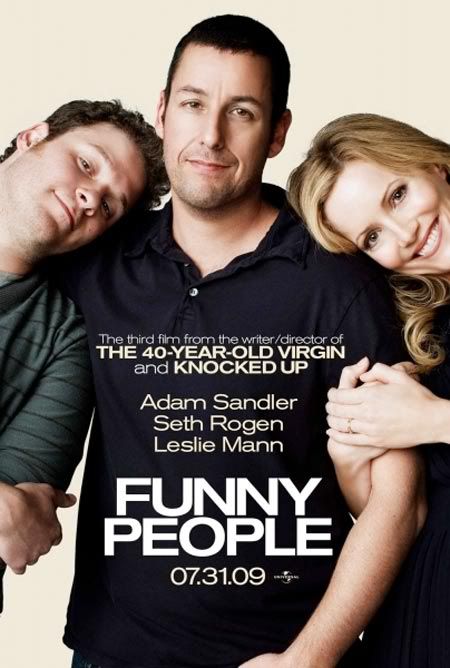
Funny People


Judd Apatow returns for his 3rd writer/directorial expedition into comedic humanity. The thing about his latest feature, Funny People, is that there is surprisingly little that's actually funny about it. The material is likely his darkest to date.

Coupling with his former roomate and friend, Apatow deconstructs Adam Sandler's 15 year ascent to Hollywood success through the persona of George Simmons. It's good to see that Sandler has a sense of humor and self awareness to the endless slew of cinematic terribleness he's been unleashing on the public since the early 00's. Basically, Simmons is informed that he has a rare blood disease (a fictional form of leukemia, we're told) that may very well take his life. On a gloomily nostalgic trip to a comedy club, he is introduced to Ira Wright (Apatow regular, Seth Rogen.) Simmons takes the budding comedian under his wing as his new joke writer and sort of legacy-holder while he undergoes an experimental treatment.

For the first hour and a half, Apatow has spun a truly honest tale of our own mortality and the disassociative effects of long term fame. Simmons is portrayed as an almost soulless being, every scrap of true humanity stripped away by a lifestyle that's become too easy, while Ira is struggling desperately to break in to the lifestyle that's broken down Simmons. However, this in depth dissection is interrupted by an all but unnecessary 3rd act involving a now married former flame of George's that really only serves as a showcase for Judd's admittedly adorable, though narratively irrelevant daughters. This segment meanders on for a bit too long and only manages to further de-humanize Simmons, making him even less relatable or even remotely likable.

Sandler finally makes use of the talent most people had forgotten he actually has (last seen displayed in Paul Thomas Anderson's Punch-Drunk Love.) Seth Rogen shows more range than we've ever seen from him this time around. Paired with Jason Schwartzman and Jonah Hill as his fame-bound roommates, Rogen sells his morose ambition to a tee. Eric Bana (in an attempt to remind people that he was in something other than The Time Traveler's Wife this summer) goes out on a limb as the aussie husband to Leslie Mann (Apatow's real life wife and mother of his 2 soon-to-be starlet kids, playing the object of Simmons' misguided affections) and really hits some funny notes before anyone can notice that his scenes aren't very useful at all.

At the heart of Funny People is a good story. Unfortunately that good story is hidden inside the trappings of a self indulgent filmmaker that doesn't have anyone who's willing to tell him that a 35 minute tangent about an ex-fiance is a bad idea. The DVD will be worth the time, with the veritable goldmine of extras including uncut comedy performances, outtakes, alternate improvs and deleted material (I'd be surprised if there is any, the movie is so long as it is.) An unfortunate misfire for Apatow after the promise that Knocked Up showed, but even a not-so-great Judd Apatow movie is a pretty decent movie, overall.

Tuesday, August 18, 2009

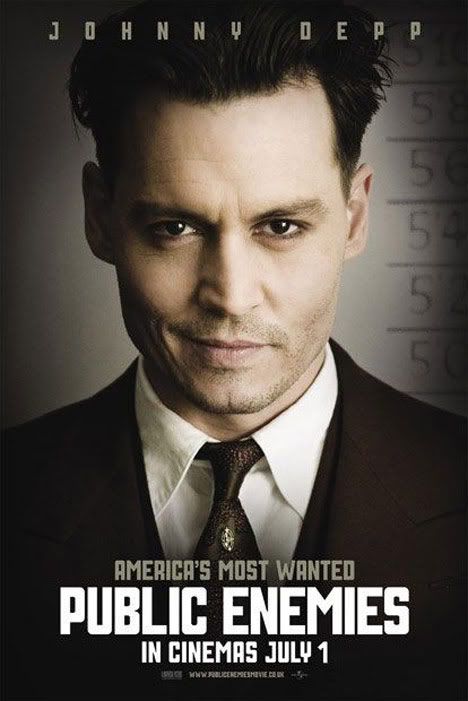
Public Enemies


Michael Mann has had an overall impressive career. There have been the missteps along the way, like the over-inflated Ali and the nigh irrelevant revisiting of his 80's TV property Miami Vice, but movies like Heat, The Insider and Collateral maintain the balance. Now as the pioneer of the Digital Cinema age, Mann's Public Enemies ushers in the new era of filmic storytelling.

Enemies takes an interesting look at the life of John Dillinger. Instead of focusing on his rise to gangster infamy as the most renown bank robber this side of the Great Depression, we see the quieter portion of his downfall leading up to his assassination outside the Biograph Theater. Also interspersed through the tale is the birth of J. Edgar Hoover's Bureau of Investigation through the machinations of G-Man Melvin Purvis.

The way Mann has utilized the digital video technology is definitely unconventional. There are a number of scenes with sparse lighting that gives the image a grainy appearance, which at first appears to be amateur but slips into an almost documentary feel at times. And yet, Mann still proves that no one can film a gun fight quite like he can. He displays some of the most sleek and dynamic camera moves of his career during the bank heist and prison break scenes.

Depp's portrayal of Dillinger is one of his most understated performances in quite some time. While his physical likeness isn't necessarily uncanny, his mannerisms and overall persona convey such a staggering amount of charisma he sells himself to the role in spades. Christian Bale finally edges his way out of his gruff, gravelly voiced typecast as Melvin Purvis, which couldn't be further from his roles as either Batman or John Connor. He constructs an interesting anti-villain, while we're set to rooting for Dillinger for the most part, Purvis' transcends the typical "lawman" archetype, making himself sympathetic and noble at the same time. Those performances aside, the show is all but stolen by recent Oscar winner Marion Cotillard. Playing Dillinger's girl, Billie Frechette, Cotillard refuses to fall victim to the award winner's follow up film curse (see: Halle Barry.) The strength her character exudes, despite the gender role trappings of the era, is undeniably powerful.

Michael Mann only graces the big screen every 3 years or so. Public Enemies proves yet again that it's worth the trip to the theater when it happens.

Monday, August 17, 2009

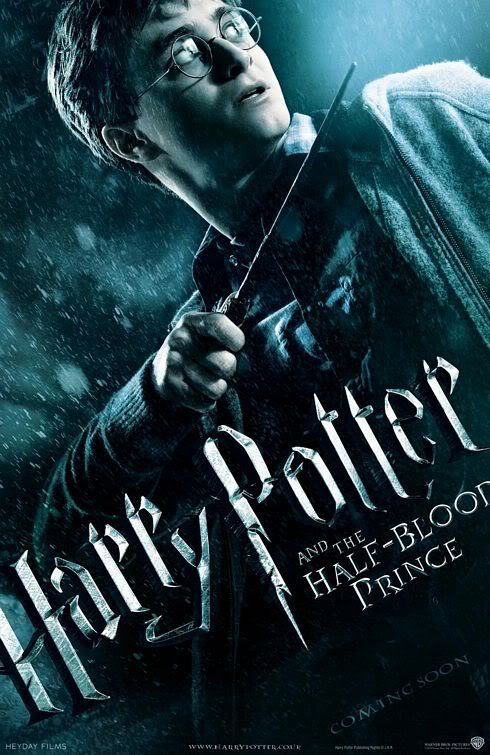
Harry Potter and the Half-Blood Prince


And so, 2009 brings us the penultimate installment of the Harry Potter franchise. While the Half-Blood Prince may be one of the most loosely adapted of the novels thus far, it stands as one of the most emotionally resonant and significant films in the series.

If you stepped into the theater expecting a beat for beat interpretation of the 600+ page novel, I'm sorry to say, you are sorely mistaken. The laborious exposition and episodic structure of the book has been simplified to the core theme of the 6th installment's story, which is the blooming emotional maturity of the main characters. This comes out in the form of fleeting and slowly growing romances among the students, apt considering at this point they are 16 years old and at the peak of their volatile hormones. Apparently, wizard or not, the birds and the bees still apply in full force.

Mostly grown by now, the Potter kids finally put on their acting pants an do a markedly admirable job. The chemistry between Rupert Grint and Emma Watson is as genuine as it is heart-breaking. Daniel Radcliffe steps up his game and transcends the huffy-puffy adolescent of previous incarnations to achieve a true emotional depth(perhaps his stage presence in Equus helped nurture this game-changing feat.) Most impressive of the young cast this time around is Tom Felton as Harry's would-be advesary Draco Malfoy. As the beleaguered almost-villain the weight of his moral dilemma is etched into his face with true professionalism. Downplayed, but still omnipresent are the cadre of seasoned actors as the Hogwarts teachers. Michael Gambon, Maggie Smith and Alan Rickman hold steady for newcomer to the series Jim Broadbent as the new Potions teacher. His portrayal of Professor Slughorn carries a whimsically drunk, though inherently melancholy tone and is likely one of the most memorable one-off characters of the series.

Second time Potter director and series finisher David Yates also proves that, while this is essentially a childrens franchise, it's also an actual film as well. The visual effects, while frequent, take a back seat to the cinematography and shot composure creating a more immersive atmosphere than in previous installments. Unfortunately, screenwriter Michael Goldenberg (who penned the impressive 5th film, The Order of the Phoenix) will remain a single chapter writer as series alum Steve Kloves re-assumes his post behind the keyboard. The adaptation is fair, but to his credit the relevance of the piece falls on the shoulders of Yates, who accomplishes it easily enough.

As the veritable "Empire Strikes Back" of the Potter catalog, The Half-Blood Prince is the opportune film to lead in the two part finale The Deathly Hallows, though we'll have to wait until winter 2010 and summer 2011, respectively.

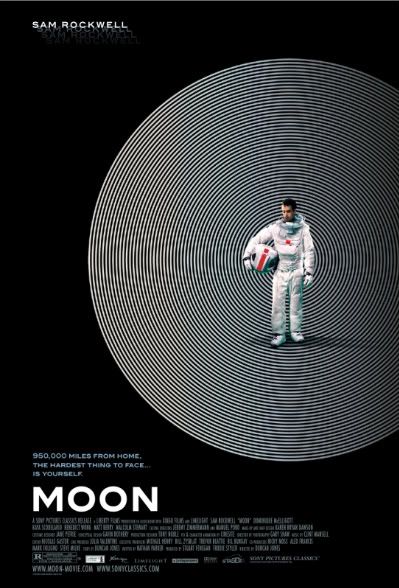
Moon


After receiving a vast amount of critical acclaim at the Sundance and Cannes festivals, the Sam Rockwell powered one-man psychological sci-fi thriller show begins to worm its way into more theaters on its steadily expanding limited theatrical run. Directed by Duncan Jones, the real life son of Ziggy Stardust himself (David Bowie) Moon takes many of its cues from classic fare like 2001: A Space Odyssey, Alien, Solaris and Silent Running.

Rockwell plays Sam Bell, an astronaut finishing the last two weeks of his three year contract in an energy harvesting base on the far side of the moon. Kevin Spacey lends his voice to the robotic service assistant, GERTY, that mills about the station on a ceiling rail. His dulcet tones haunting the hollow compartments that Sam inhabits. As his contract end date approaches, his mental state begins to wane and he is involved in a moon rover accident following a hallucination. Sam awakens back in the station to find that there is another Sam Bell on the station who claims to be there on the same three-year contract.

Jones exploration into the nature of the human condition when faced with bleak and undeniable solitude is nothing short of mind blowing at times. The atmosphere is set perfectly in the cramped confines of the Sarang station's set design. The dim neon lights reassert the artificiality of Sam's surroundings. The choice to use miniatures instead of straight up CG adds a veritable amount of believability to the isolated locale of the moon's surface. The haunting score by Clint Mansell (best known for his work with Darren Aronofsky, namely Requiem for a Dream) seems to reverberates off the station walls, becoming a living attribute to Sam's plight.

Of course, it's impossible to leave the theater and not commend Rockwell for the daunting task of being the sole human character(s,) especially after the performance he's thrown together. While known for more eccentric characters like Billy the Kid from The Green Mile, Hitchhiker's Guide to the Galaxy's two headed, partially retarded ambassador Zaphod Beeblebrox and most recently the sex-addicted con-artist, Victor Mancini the adaptation of Chuck Palahniuk's Choke, Rockwell employs a staggering range of emotion, especially when acting against only himself. It's almost convincing enough to assume that Rockwell has a true life twin to act off of, though it's all camera tricks and simplistic duplication effects.

Though a great deal of Moon's moral and ethical themes are unpleasant to ponder, what comes off the screen sticks with you. As a freshman effort from Duncan Jones, the end product is astounding to say the least. This is a director to keep an eye on in the coming years.

Thursday, August 6, 2009

Rest in Peace, John Hughes

It's not surprising how affected I feel as I write that John Hughes has passed away. This is the man who essentially introduced me to comedy, let alone cinema.

If it weren't for Hughes, I may not be writing the way I am today (prose, comic, screenplay or critical essays) and he will always stand as an inspiration to myself and anyone else with a pen (or word processor) in hand.

Speaking for the past, present and future scribes of the world... We'll miss you, John.

Friday, July 31, 2009

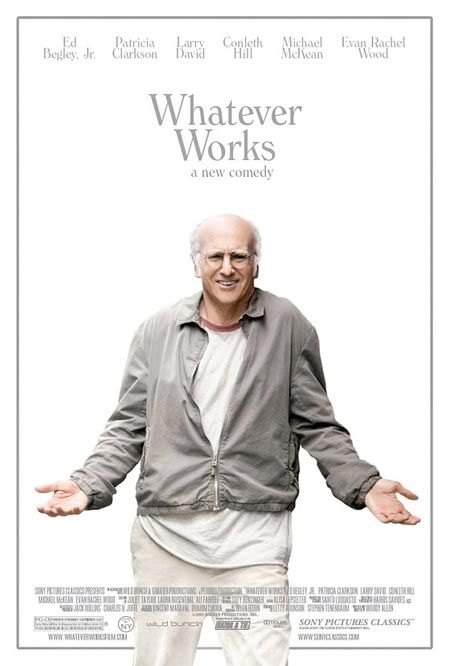
Whatever Works


Woody Allen has been in the business so long, it seems he tried just about every genre. His latest venture, Whatever Works, is ultimately more of a throwback. Most likely since the script was penned back in the 70's. Aside from adjusting the socio-political references to be more modern and relevant the film works remarkably well.

Casting Larry David in the lead role as aging cynical genius, Boris Yelnikof is a veritable stroke of genius on Allen's part, and any fan of Curb Your Enthusiasm will agree. Utilizing an Annie Hall style 4th Wall Breaking Narration, David sets the tone for this sarcastic, delightfully misanthropic love story. Despite all his harsh criticisms on the state of human affairs in this day and age, that's what this movie ultimately is. A love story.

Following Boris' divorce and his failed (yet comedic) suicide attempt, he spends his days with a bum ankle, teaching chess to grade-school children (just as harshly as he'd teach adults, plus physical abuse to boot) and waxing intellectual with his diner buddies (including a criminally underused Michael McKean.) On the way home to his dingy NYC apartment he stumbles upon (or over, as it were) the homeless deep south runaway, Melodie St. Ann Celestine (played remarkably well by Evan Rachel Wood.) Surprisingly The two form a twisted sort of bond, but a bond nonetheless, before her bible-thumping parents (Patricia Clarkson and Ed Begley, Jr.) swoop in to rescue her, or so they think.

Despite the abrasively negative disposition of the protagonist, Whatever Works has a very light heart at its core. Allen's return to the states after a bout of films across the pond gives the material a lived in feel. He truly is at home here. Though, it's very apparent that he has much more to say than what is expressed by the end of the film. An unfortunate side effect is the limiting scope of Begley, Jr's performance. His character arc is almost a footnote to the development and growth his fledgling big city newcomers make. All things considered, Whatever Works is a no nonsense, nonsensical, ugly yet cute look at fictional love in the real world, as only Woody Allen can spell it out.