Monday, March 29, 2010

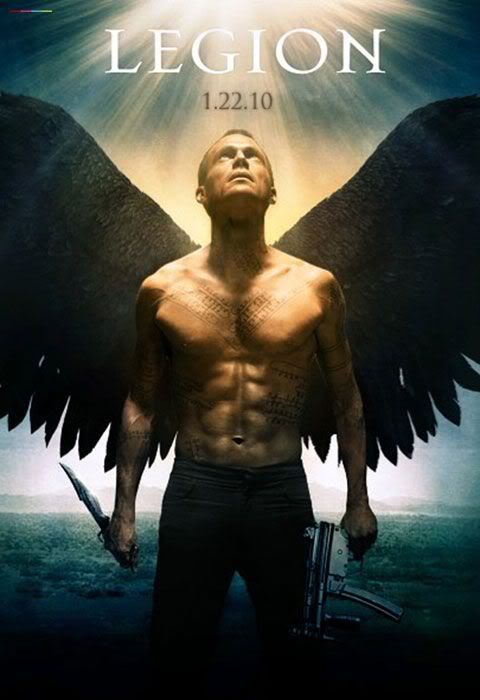
Legion


(Transcribed from 91.9FM's 91 Seconds on Film segment)

It's January and the cinematic dumping ground is officially upon us. If Moses had access to the movie Legion, the Jews would have been freed from Egypt in just under two hours without the hassle of plagues or sea parting. By all logic, Legion shouldn't be a movie. This means that a script was written, someone okayed the script, found financing and budget, A-list actors, crew, cooks, carpenters and a studio willing to put their name on it before it comes even close to a theatrical release. How any of these parties got involved beyond the scripting point can only be deduced to an inexplicably large sum of money.

So Legion gives us the Paul Bettany as the Archangel Michael who has come to 21st century earth to save humanity from a vengeful God by preserving the life of a baby that is apparently important to this scenario for reasons we never find out. So he holes up in a middle of nowhere desert diner with a band of red-shirts that are either wholly unlikable or terribly dull. So instead of applying anything from the book or revelations, God decides he's an Evil Dead fan and possesses humans to serve as an easily disposable army against Bettany and his sharpshooting stowaways. For a director with a background firmly rooted in special effects work, the visual effects in Legion are laughable and frequently edited around with more shots of blazing gun barrels and bouncing machine gun shells. It's hard to tell if the actors were in on a joke the director wasn't aware of because Dennis Quaid and Charles S. Dutton phone in the best performances of their latter day careers, unfortunately through characters that have either no thematic relevance or real narrative purpose beyond demon fodder. I'd say that Legion is to the point of "so bad it's funny" but after a certain point even the unintentional laughs become predictable creating a misfire of truly biblical proportions.

Friday, February 26, 2010

Tales from the Back-Log

So everything's been pretty hectic over the last few months. I've been able to maintain my reviews for the radio, but haven't been able to transcribe them onto the net in a timely manner, so the next 3 reviews will be a little dated. Now that everything is relatively settled, I should be able to keep everything posting at a normal rate again.

Thanks for reading!

Thursday, February 25, 2010

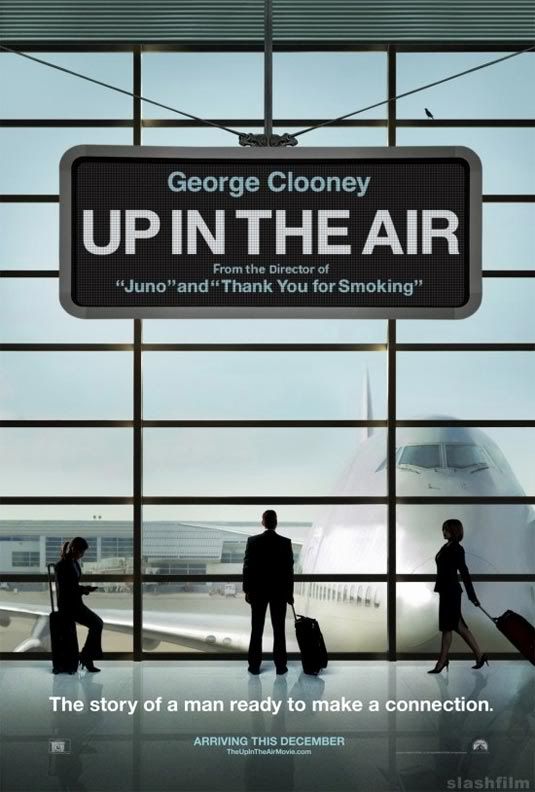
Up in the Air


For a film primarily about air travel, allow me to open with a stupid joke. Jason Reitman totally nails the landing! As far as his directorial career, he's shooting three for three. 2004's Thank You for Smoking was a solid first feature endeavor and despite the problems I had with Juno on a screenwriting level, it was a very well put together movie, as far as teen romance/thinking outside the box comedies are concerned. Up in the Air looks and feels like the perfect tonal follow up to TYfS.

Clooney plays Ryan Bingham, a "miles" obsessed travel addict who takes on the seemingly difficult task of laying off individuals when the company they work for is too chickenshit to do it themselves. Though Bingham handles his job with poise and confidence, granting words of wisdom tinged with a poetic grace as he ushers the newly terminated into their new life of future employment. Enter two drastically opposite, though equally valuable females into Ryan's life. Alex, a fellow travel-phile and sometime bed-fellow with which he shares a profound connection in their respective philosophies about life and Veronica, the company's new upstart determined to outsource Ryan's job with the advent of internet video chat.

Interspersed amid the narrative are actual personal accounts of people who have been "let go" of their corporate livelihood. A gutsy move considering the economic climate and massive layoffs taking place in the country. Though it's not a downer by any means, but more of an uplifting snapshot of the human spirit in the face of one of the most devastating experiences we can have in life next to breakups and the death of a loved one. Accenting these asides are brief yet excellent performances by Zach Galifianakis and JK Simmons to anchor these vignettes to the narrative. Jason Bateman also puts in a markedly off typecast role as Bingham's cutthroat boss. If nothing else, this film is the reason why George Clooney is a leading man in the film industry, completely deserving of any nominations that are coming his way. Vera Farmiga (The Departed) does a bang-up (no pun intended) job as Alex, branching out as a newly christened A-lister. The most notable impressive casting choice was Anna Kendrick as Veronica. Best known for her barely supporting role in the Twilight films, she shows range and skill in this emotional roller coaster of a role.

Stepping back into the writer's room adapting the novel by Walter Kirn, Jason Reitman is quickly becoming the voice of his disembodied generation. He doesn't seem at all intimidated by either his father, Ivan's the cultural footprint or extensive catalog of producing and directing credits. The junior Reitman exudes a very plain honesty about character and interpersonal relationships that many modern dramas overlook. Where most films will polish their themes with flashy dialog, and while Bingham is a big talker, Up in the Air's most poignant moments often don't include any dialog at all. It takes a talented director to connect with an audience in these quiet moments onscreen, and is likely by Up in the Air is one of the best movies you're likely to see this year (2010 included.)


Wednesday, February 24, 2010

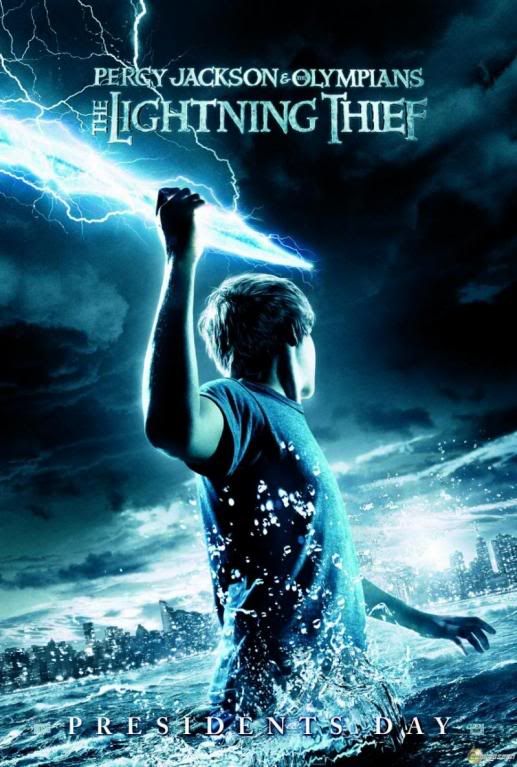
Percy Jackson and the Olympians: The Lightning Thief


They say lightning never strikes twice. In regard to Percy Jackson and the Olympians colon The Lightning Thief, the true thief is, in fact, Harry Potter himself. It seems the studios have been churning out countless one off duds since Pottermania turned a decent profit almost ten years ago. However Young Adult fantasy franchises seem to hit the big screen and fail to draw an audience, the inexplicable phenomenon that is Twilight notwithstanding. So after star studded failures like The Spiderwick Chronicles, The Golden Compass and Eragon, it's no surprise that Percy Danger and the High Voltage Squad colon Electric Boogaloo fails to gain a foothold in the niche that Potter is so close to vacating.

Percy Daggett and the Olympic Medalists colon Thunderstruck brings absolutely nothing new to the table as far as teen fantasy is concerned. Percy is your run of the mill teen that likes to sit at the bottom of the school pool for drowningly extensive periods of time. He soon finds out he's the cross breeded offspring of the Greek God Poseidon. It turns out Zeus' lightning bolt has been stolen and he blames Percy because… well… Why not? This will cause a war among the gods for an unforeseen and never mentioned reason. Percy gets attacked and is sent to Hogwarts… I mean… God Camp to learn how to be a warrior, since that's what gods do. Pierce Brosnan makes a literal horses ass of himself as his Centaur teacher before Percy and his resident Ron and Hermione clones run off to save his mother from Hades, against Camp Rules, of course. There is a stellar cast, the likes of Uma Thurman, Catherine Keener, Rosario Dawson and UK funnyman Steve Coogan tossed in amid the tepid performances of the three lead adolescent characters who meander through their dialog and character arc cliches. Occasionally, a cleverly re-imagined piece of Greek Mythology will surface, but Potter director Chris Columbus gives it so little attention, it's poignancy is lost to make way for the next pratfall or sight gag. With Potter ending within the following year, the Young Adult fantasy market is due for its next moneymaker, though chances are Perry Nuggets and the Neanderthal Clan colon Storm Chasers is not going to be it.

Monday, October 19, 2009

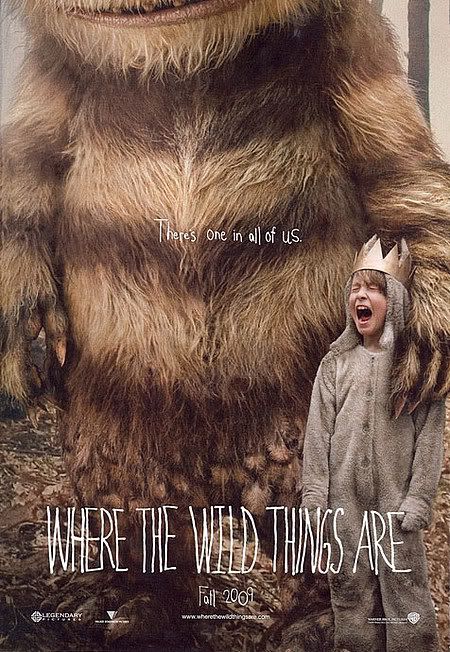
Where the Wild Things Are


It's a book with 40 pages and 10 sentences. Maurice Sendak wrote it in the 60's to a heavily mixed reception until it eventually became an established classic and a hallmark of childrens literature. Given the brevity of the material and the state of basically all film adaptations of storybook classics it's amazing that a workable 90 minute movie could be lifted from "Where the Wild Things Are." Lucky for us, Maurice Sendak isn't your normal kids author and Spike Jonze isn't your normal film director.

Aside from the animated version from the 70's (which clocked in at a staggering seven minutes) a full length feature seemed not only a generally bad idea, but seemingly implausible without the contrivances of "back story" and inflated, heavy handed thematics (Ron Howard's The Grinch comes to mind...) Then in steps independent visionary director, Spike Jonze (Being John Malkovich and Adaptation,) having struck up a genuine friendship with Maurice, took the project in an unexpected and daring direction. With Sendak's blessing to "do whatever you want with it," Jonze teamed up with author Dave Eggers (A Heartbreaking Work of Staggering Genius and this year's indie hit Away We Go) to bring out the thematic importance of not only what the book is about, but what it truly means to those that have enjoyed it for generations.

As the story goes, Max, adorned in his wolf costume, is an unruly child that is sent to bed without any supper after causing more mischief than his mother is willing to deal with. Max creates a fantasy world in his bedroom and sails to the land of the "Wild Things" and becomes their king. All the elements of the book are prominently featured (even down the the opening, pre-credits sequence in which a rambunctious Max chases his pet dog with a fork.) The expansions on the material consist of exploring the reasoning for Max's behavior. What causes him to act out? Why does he feel the need to escape? What ARE the Wild Things, realistically and to Max? The film meets Max as a normal kid with an overactive imagination. His parents are divorced and his sister is too old to be his friend any more. This is a child dealing with feelings and emotions he doesn't even understand yet, let alone knows how to deal with on any real level. Therein, whether his trip to the land of the Wild Things is real or not, it's an internalization and a personal mirror for Max to work through his feelings.

Each of the Wild Things represents a piece of Max and at the same time, pieces of the opening 1o minutes are either revisited or presented in a new light during Max's visit. The lead creature, Carol (voiced amazingly by Tony Soprano himself, James Gandolfini) is the closest representation of Max, and ultimately becomes his best friend. Ira (Forrest Whitaker) plays to Max's creative side and his island partner, Judith (Catherine O'Hara) sometimes represents Max's feelings on his older sister. KW (Six Feet Under's Lauren Ambrose) is the closest creature to representing the mother figure and the catalyst for many of the emotional squabbles. There are no heavy handed morals, or extensive speeches that come out and say all the lessons presented in the contained material, these are left for interpretation by the viewer.

Max Records, the breakout star as the aptly named Max, puts on the most genuine and honest performance of any child character ever seen on film. When I say Max is a genuine little kid, he IS a REAL little kid. He's not the wise-beyond-his-years, prodigal child that speaks like an adult that we see in every other kids movie. He thinks and speaks like a REAL little kid. He moves like a REAL little kid. His logic is mired in the trappings of a REAL kid's imagination and that's why it works so well. While some of the more intricate ideals in Where the Wild Things Are may not be apparent to some children, they should be able to at least relate to Max on a fairly personal level (given they've got the capacity for at least some imagination.) Catherine Keener makes a brief but notable appearance as Max's tired and exasperated mother. She does a wonderful job of evoking sympathy while standing in the way of Max's journey.

Where the Wild Things Are sets the bar pretty high for a family film. It doesn't talk down to the audience, but operates on the fact that while you may not know what you're feeling during or afterward, you genuinely felt something. It's there to let us know, it's ok to feel scared and sad sometimes, even if we don't know why or how to fix it. These are the things that make us human and these are the things we need to come to understand when it comes to growing up. And growing up is ok, but it's also ok to keep that inner child on standby because you should never have to take everything so seriously.

Friday, October 16, 2009

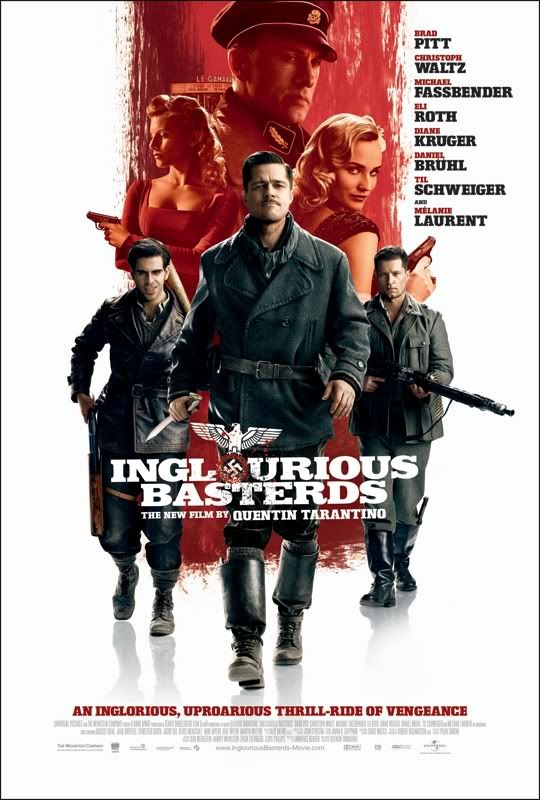
Inglourious Basterds


Quentin Tarantino likes to take his time between films. He'd originally announced the concept for Inglorious Bastards shortly after Jackie Brown (and the advent of the World Wide Web) though details were sparse, set to star then Tarantino favorite Michael Madsen and citing World War II and French Jewish Nazi Killers, the project was seemingly forgotten in the wake of the looming Kill Bill rumor mill. Now, 10 years later, Inglourious Basterds (misspelling intentional) finally sees the light of day.

The first thing to be aware of going in is that this is a Quentin Tarantino movie. There will be lots of dialog. Excessive amounts of it, actually, but this has always been Tarantino's strong suit. Each series of dialogs and monologues has such a specific tone and pace that the building tension is impossible to look away from. Not to mention that every payoff is exhiliratingly poignant (and inexcusably bad ass in only a way Quentin can sell it.) His structure is set up like a more deeply connected Pulp Fiction. Each act serving as a specific chapter (with chapter titles preceding each) that all collide into a beautifully chaotic final sequence that will get the vengeance blood pumping straight through your cerebral cortex.

Using his multiple narrative style, "Basterds" bounces from Lt. Aldo Raine and his band of merry nazi scalpers to the plight of a Jewish refugee operating an independent movie theater in German occupied France and ties them all together with a British top secret operation set on turning the tables of WWII. On the other side of the fence is S.S. Col. Hans Landa and Pvt. turned actor Frederick Zoller in their attempts to promote the Third Reich and defuse the Basterds proverbial death march.

Though the cast went through a roller coaster of changes up until filming began, Tarantino couldn't have assembled a better set of actors for his latest work. Leading the pack of "Basterds," as they're christened, is of course Brad Pitt. While Lt. Aldo Raine may not necessarily be the best performance of his career, it is definitely one of the most entertaining. His thick southern Tennessee accent provides hearty laughs in between nazi (pronounced crude, yet delightfully as "gnat see") killings. Eli Roth (Cabin Fever and Hostel director turned Tarantino protege) heads up second in command to the "Basterds" as Donnie Donowitz, aka "The Bear Jew," the most feared nazi killer of the lot (and for good reason, we see in detail.) Though the Basterds themselves only make up a mere 30% of the two plus hour film, the real stars of the film are Christophe Waltz as the menacingly lighthearted villain, Col. Hans Landa and the vengeful, Jewish refugee, Shoshanna Dreyfus played pitch perfectly by French actress Mélanie Laurent. Shoshanna, being the only surviving member of her slaughtered family carries a quiet rage and an inherent sense of melancholy. Landa on the other hand, is a truly terrifying villain. Not only does he outwardly love his job, but takes a certain pleasure in playing a game of verbal cat and mouse before going in for the kill (literally, most times.) Other notable players include The Office's writer/actor/favorite temp, BJ Novak, Mike Meyers in an unexpected cameo, Diane Kruger (National Treasure 1 and 2) as German actress Bridget Von Hammersmark and Til Schweiger's nazi killing psychopath, Sgt. Hugo Stiglitz.

Combining his affections for vintage exploitation films of the 60's and 70's and his pop sensibilities as a product of the 90's, Tarantino's latest sets his watermark to a new high. The quality of performance and narrative styling is easily on par with his latter day success, Pulp Fiction. Despite its almost 10 year gestation period, Inglourious Basterds was indeed worth the wait.

Wednesday, October 14, 2009

District 9


Nobody saw it coming. A small scale internet teaser subtly reworked and released to theaters two months prior to wide release and no one had heard a thing (unless you were REALLY looking for it.) Even after the full on trailer hit screens with three weeks to go, no one knew quite what to expect. All they had was a name and a relatively disturbing alien interrogation. Luckily, that name happened to be Peter Jackson.

Peter Jackson requisitioned special effects man Neill Blomkamp to direct what was going to be the Halo movie. Having made a series of high quality, low budget Halo short films based on the popular X-Box video game series, it wasn't a surprise that Jackson saw promise in Blomkamp's early work. Unfortunately, the Halo financial negotiations fell through causing the project to derail rather quickly, though Jackson, being a man of his word still insisted that he produce a project with Neill. This project would become what was lauded as one of the best sci-fi pictures of the year, and it's not an incorrect assessment.

Based on Blomkamp's earlier short film, Alive in Joburg, District 9 exists as a proverbial genre-mash of epic proportions. Part documentary, part metamorphosis/body horror and part action film, it all serves as an alternate universe dissection of apartheid and racism in South Africa. Which isn't to say it's overtly "messagey," these undertones are noticable but never crammed down your throat. In the District 9 universe, an alien ship landed (though it remains hovering in the atmosphere) some 20 years ago in Johannesburg, South Africa. After finding starving and frightened bug-like creatures on board, they are given refuge in the slummy District 9, segregated from the human population and slangly referred to as "Prawns."

The story essentially follows Wikus Van Der Merwe, a dim executive who works for MNU (Multinational United,) a private military corporation in charge of relocating the increasing Prawn population to the even slummier District 10. Wikus is documented as he enters District 9 to have relocation papers signed off on by the interstellar residents. Wikus is inadvertently exposed to an alien toxin and suddenly becomes the expendable top secret project of the MNU.

The visual effects in District 9 are nothing short of amazing. Of the hundreds of Prawns that are featured prominently in the film, not a single one was created using makeup or animatronics (even for close ups) but rendered entirely digitally. The alien tech and weapons (which only function when used by Prawns due to DNA compatibility) is very reminiscent of the Halo series and even it's bitter rival PC series, Half Life. Other genre classic comparisons can be drawn from films like Enemy Mine, David Cronenberg's The Fly, Aliens and even more recent blockbusters like Iron Man (actually, I'm hoping IM director Jon Favreau was taking notes during the last act for next summers Iron Man 2.) Lead actor Sharlto Copley (at the time unknown, but now rumored to be cast in the upcoming A Team movie) completely sells this film. At first coming off ultimately unlikable, his path to redemption and sympathy is indeed a compelling one and wouldn't have translated were it not for his genuine performance. He appears to be an actor that gives 110% and may prove to be in high demand in years to come.

Despite having no Hollywood stars and a minimal budget (at least by Tinseltown standards) District 9 really comes out on top. Peter Jackson knows talent when he sees it and not only am I looking forward to more up and coming talents he may find, but any further projects by director Neill Blomkamp, whether it's the proposed sequel/prequel, Halo (if it gets off the ground) or any other original concept.